

Cut on site · Any blade profile
Automotive Key Cutting Service
Spare keys, replacement blades, laser-cut sidewinders and high-security profiles — cut at your vehicle, from your VIN, without a trip to the dealership.
What cutting actually is
The Blade Is Mechanical. The Chip Is Not.
Two separate jobs that get quoted as one, which is where most confusion starts.
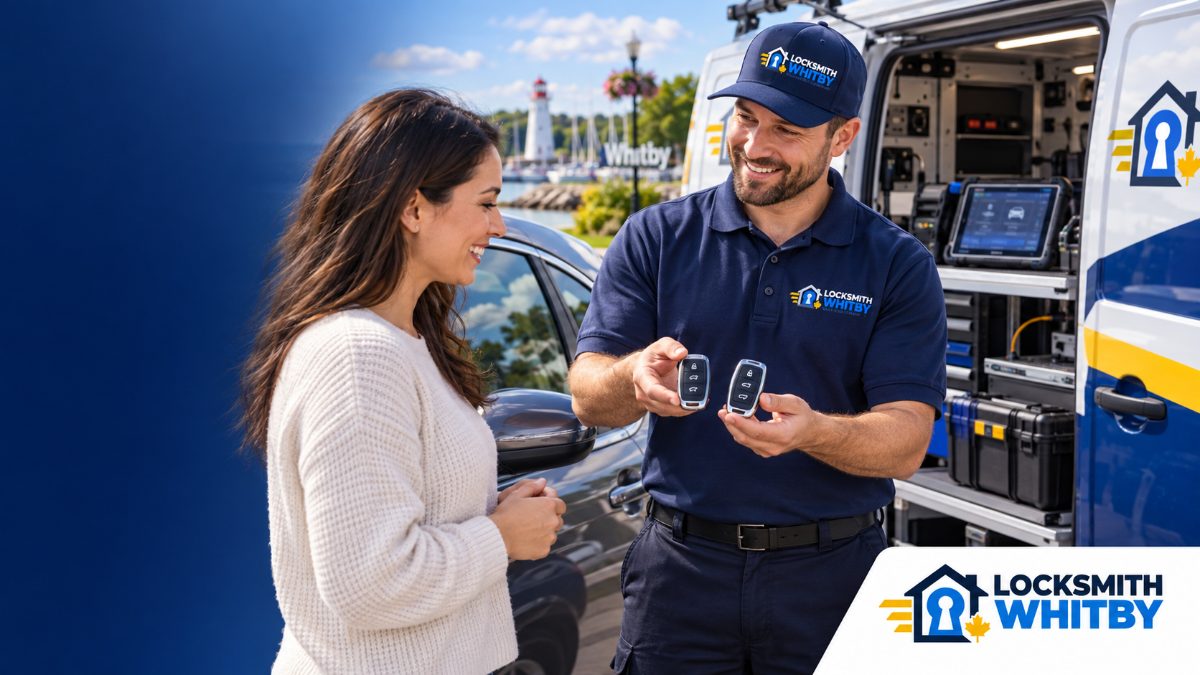
Cutting a key means shaping the metal so it lifts the pins or wafers in your door and ignition cylinders to exactly the right heights. It is pure mechanics and it has nothing to do with electronics. Done correctly, the blade turns smoothly with no wiggling; done badly, it turns today and wears your cylinder out over the following year.
The chip in the head of the key is a separate matter entirely, handled by programming. That is why a key cut at a kiosk in a mall will open your doors and never start your engine, and why the honest quote for “a spare car key” always has two parts to it.
We do both, at the vehicle. But it is worth understanding that they are different operations with different equipment behind them, because it tells you immediately whether the person quoting you knows what they are doing.
Blade types
Every Profile We Cut
The profile determines the machine, and the machine determines the price.
Standard edge-cut
Notches milled along the edge of the blade. The traditional car key, common up to the mid-2000s and still used on many trucks and work vehicles. Fast to cut and the least expensive blade there is.
Laser-cut (sidewinder)
A winding channel milled into the flat face of the blade rather than notches on the edge. Stronger, far harder to pick or impression, and needs a milling machine rather than a duplicator. Standard on most vehicles since the mid-2000s.
Internal-cut and high-security
Milled tracks on the internal faces of the blade. Used by several European manufacturers and by some high-end trims. The most demanding profile to cut correctly and the least tolerant of a worn blank.
Flip and switchblade keys
The blade folds into the fob body. Mechanically a normal blade, but the hinge and spring wear out and the shell cracks. Very often the electronics are fine and only the case needs replacing.
Proximity fob emergency blades
The small mechanical key hidden inside a push-button-start fob. Rarely used and therefore rarely checked — and it is the thing that gets you into the car when the fob battery dies.
Motorcycle, RV and equipment keys
Bikes, trailers, campers, boats and small plant. Often simple profiles, frequently impossible to get locally, and usually cuttable from a code stamped on the lock or the original key.
Cut by code
How We Cut A Key With No Original To Copy
Duplicating from an existing key is straightforward: the original is traced and reproduced. The interesting case is when there is nothing to copy, and there are two ways through it.
The first is cutting to code. Every vehicle has a key code associated with its VIN, held by the manufacturer, which describes the exact cut depths. With proof of ownership we obtain that code and cut the blade directly to specification. The result is a key cut to the factory original rather than a copy of a copy.
The second is decoding the lock itself. A door or ignition cylinder can be read with the right tools to determine the depths physically, without any reference to the manufacturer at all. This is slower but it works on older vehicles where codes are no longer available, and on vehicles whose locks have been replaced at some point and no longer match the VIN.
Cutting to code has one genuine advantage worth knowing about: it produces a key to original specification rather than reproducing the wear in the key you are copying. If your current key already has to be jiggled, copying it copies the problem.
Signs your key is worn out
✓ You have to jiggle it to turn the ignition.
✓ It only works one way up, or in one door.
✓ The edges look rounded against a newer key.
✓ It sticks going in or coming out.
✓ The plastic head is cracked or flexing.
✓ It works in the door but not the ignition.
A worn key wears the cylinder. Replacing the key is far cheaper than replacing the barrel.
Spares
The Second Key Is The Whole Point Of This Page
Everything on this site about automotive locksmithing comes back to one habit. Cutting and programming a spare while you still have a working key is a modest, predictable job. Doing it with no keys at all is a completely different operation, takes considerably longer, and costs a multiple of it.
People put it off because there is no urgency, and the moment there is urgency it is too late to do it cheaply. That is the entire trap.
If you are already having work done — a lockout, a lost key, an ignition problem — that is the moment to have two keys made rather than one. The programming session is already open and the second key costs a fraction of a separate visit later.
And keep them apart. Two keys on one ring is one key with a redundancy problem.
Getting it right
Four Things That Make A Cut Key Last
01
Cut from a code, not a worn key
Copying a worn key reproduces the wear. Cutting to the vehicle code produces a key to factory specification.
02
Use a quality blank
Cheap blanks are softer, wear quickly and can snap in the cylinder. The blank is the smallest cost in the job and the one most worth not saving on.
03
Test in every lock
Doors, tailgate, glovebox and ignition. A key can turn perfectly in one cylinder and bind in another, and that is easier to correct on the spot.
04
Retire the old worn key
If it has to be jiggled, stop using it. Every turn is grinding the cylinder it is used in.
Do Not Buy A Blank Online And Ask A Kiosk To Cut It
It seems like an obvious saving and it is the most common false economy in this trade. Online blanks are frequently soft, dimensionally out of specification, or carry a chip that does not match the one your vehicle expects.
A soft blank wears quickly and can snap inside the ignition, which turns a spare-key errand into an extraction job and sometimes a barrel replacement. A blank with the wrong chip cuts fine, opens the doors, and never starts the engine — and you have paid for both the blank and the cutting to learn that.
If you have already bought one, bring it to us. We will tell you honestly whether it is usable before cutting it, rather than cutting it and charging you either way.
Questions
Frequently Asked Questions
Can you cut a key without the original?
Yes. We obtain the key code from the VIN with proof of ownership, or decode the lock cylinder directly. Both produce a key cut to specification rather than a copy.
Does a cut key start the car?
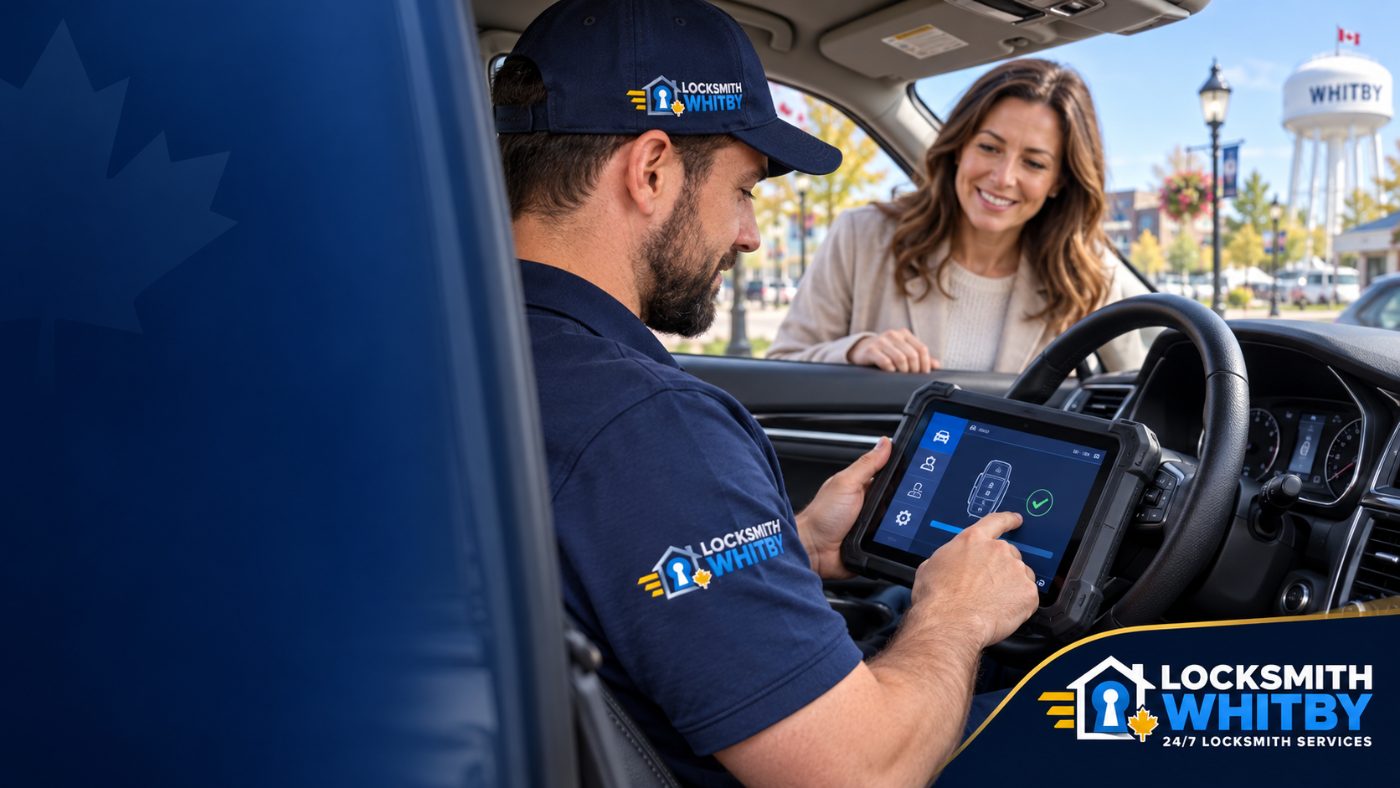
Only if it also carries a correctly programmed transponder. Cutting and programming are two separate operations, and an honest quote covers both.
How long does key cutting take?
The cutting itself is minutes. Obtaining a code, or decoding a lock, and then programming the key is what determines the length of the visit.
Can you cut laser-cut and high-security keys?
Yes, on a milling machine at the vehicle. These blades cannot be produced on the duplicating machines found in hardware stores.
My key works in the door but not the ignition. Why?
Usually wear. Ignition cylinders take far more use than door locks, so a slightly worn key stops working there first. It is a warning that the key is due for replacement.
Can you cut motorcycle or trailer keys?
Yes, and these are often the ones nobody else will touch. If there is a code on the lock or a usable original, we can almost always reproduce it.
Not just cars
The Other Keys Nobody Will Cut For You
A large share of our cutting work is not automotive at all.
Motorcycles and scooters. Ignition and seat locks, often with a code stamped on the lock body. Dealers frequently want the bike brought in; we can usually cut from the code on the spot. Older bikes may need the lock decoded, which is straightforward on most makes.
Trailers, campers and RVs. Hitch locks, storage bay locks, entry doors and propane compartments — and typically four or five different keys per unit, at least two of which have been lost. Most use standardised profiles and can be cut to code, and a lot of owners are pleased to discover the whole set can be keyed alike.
Boats and marine hardware. Ignition, cabin and locker keys. Salt and damp destroy blades faster than anything on land, so a spare kept ashore is worth more here than anywhere.
Plant, equipment and mowers. Ride-on mowers, small excavators, lifts and generators, most of which run on a small number of universal profiles. If you manage equipment for a business, keying a fleet alike is usually possible and saves an enormous amount of daily aggravation.
Furniture, cabinets and lockers. Filing cabinets, desk drawers, display cases, tool chests and locker banks — almost always with a code stamped on the lock face or the original key. These are the jobs nobody else wants to drive out for, and they take minutes.
Service area
We Come To You
We are a mobile service — there is no shop counter to drive to. Whitby is our home base, and we cover Durham Region and the eastern GTA, day and night.
Not on the list? If you are anywhere in Durham Region, call and ask.
▸ Pringle Creek
▸ Lynde Creek
▸ Blue Grass Meadows
▸ Ashburn
▸ Myrtle Station
▸ Columbus
Locked Out? We Answer The Phone.
24/7 mobile locksmith service across Whitby, Brooklin and Durham Region. Real prices on the phone, a marked vehicle at your door, and a written invoice when we are done.