
Transponders · Fobs · Immobilisers
Auto Key Programming
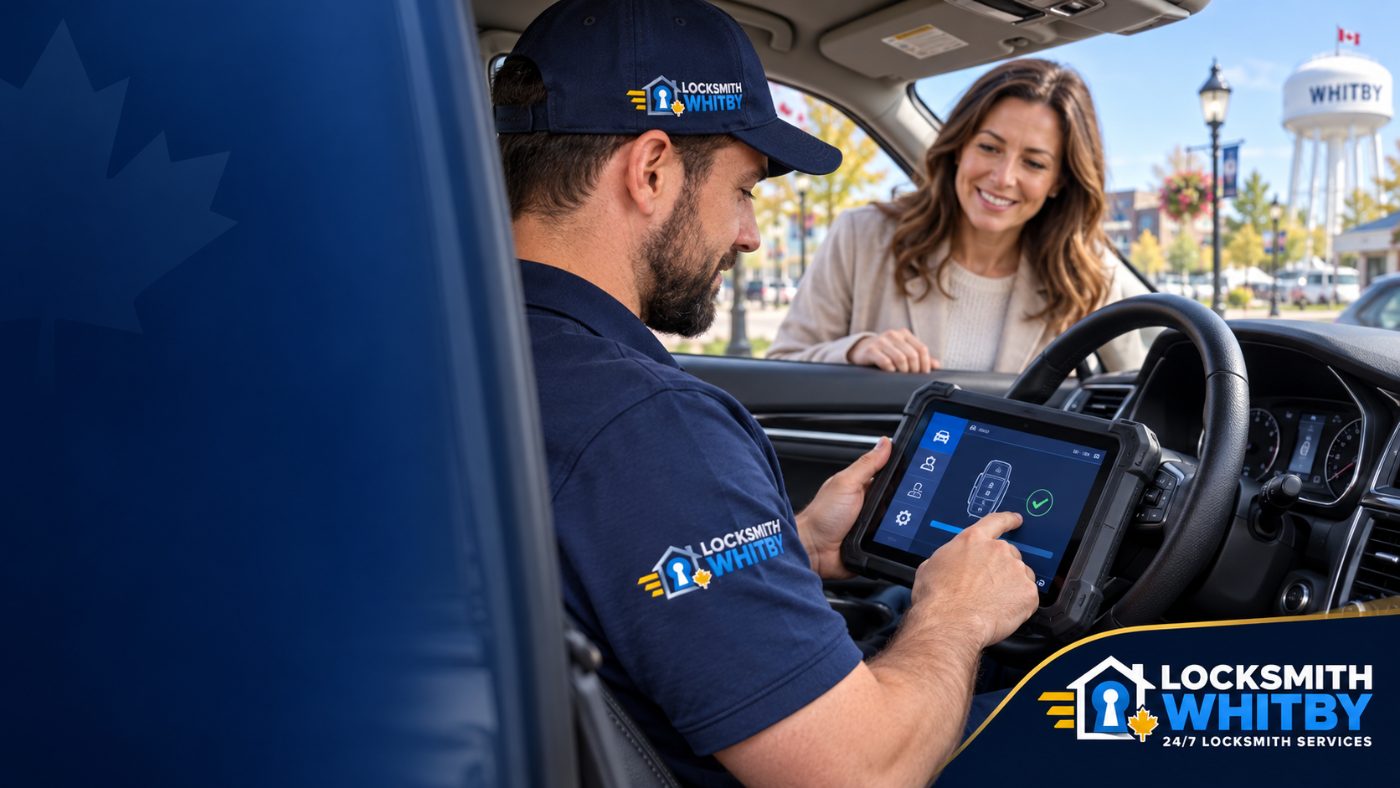
A cut key that will not start the engine is a key that has not been programmed. We enrol transponders, pair fobs and erase old keys — at your vehicle, through the OBD port.
What programming is
Teaching Your Car To Recognise A Key It Has Never Seen
Cutting is metal. Programming is a conversation with the immobiliser.
Inside your car is an immobiliser: a module that holds a list of key identities it will accept and, unless it recognises one, keeps the fuel and ignition circuits disabled. Turning the ignition energises a coil around the barrel, the transponder chip in the key wakes up and answers with its code, and the module checks that code against its list.
Programming means adding a new identity to that list. It is done through the OBD diagnostic port under the dashboard, using equipment that can authenticate to the vehicle’s security system and instruct it to enter key-learning mode. On some vehicles that is a matter of minutes. On others it requires a security code obtained from the manufacturer against proof of ownership, and on a few very recent models it is genuinely dealer-only.
It is also, importantly, reversible. The same access that adds a key can delete every key currently stored — which is the single most useful thing an automotive locksmith can do for somebody whose keys were stolen.
What we program
Every Credential Your Vehicle Uses
All performed at the car, with proof of ownership.
Transponder keys
The chip in the head of the key, enrolled to the immobiliser so the engine will actually start. The core of every automotive programming job.
Remote fobs
Lock, unlock, tailgate, panic and remote start paired to the vehicle’s receiver. Sometimes a separate operation from the transponder, sometimes the same one.
Proximity and smart keys
Push-button-start fobs, which combine both functions and broadcast continuously. More expensive components and a longer programming session, but the same principle.
Spare keys alongside existing ones
Adding a key while your current keys stay working. The quickest and cheapest programming there is, and the reason to do it before you need it.
All keys lost
No working key to authenticate with. The system has to be accessed directly and it takes considerably longer. See lost auto keys.
Erasing stored keys
Deleting every key the vehicle currently accepts. Essential when keys were stolen, and the step most often skipped by whoever cut the replacement.
Key shell replacement
A cracked case or a broken flip hinge where the electronics are perfectly fine. The chip and board move into a new shell and no programming is needed at all.
Aftermarket remote starters
Systems that need their own key or bypass module enrolled. Frequently the cause of intermittent no-start faults that get blamed on the vehicle.
Diagnosing no-start faults
Determining whether the key is being read at all. That single test separates a key problem from an immobiliser or a fuel problem very quickly.
Diagnosis
Is It The Key, Or Is It The Car?
People arrive at this page convinced the key has failed, and often it has not. The distinction matters because one is a locksmith job and the other is a mechanic’s.
The classic immobiliser symptom is an engine that cranks normally and refuses to fire, usually with a security or key-shaped warning light on the dash — sometimes flashing, sometimes solid. The starter works, the battery is fine, and nothing happens. That is the module refusing to enable fuel and ignition.
If the engine does not crank at all and the dash is dark, that is electrical — battery, starter or ignition switch — not the key. If the key will not physically turn in the barrel, that is mechanical wear in the cylinder or the key, which we can also fix but is a different job again.
And a surprisingly common one: the transponder aerial ring around the ignition barrel fails. The key is perfect, the immobiliser is fine, and the two simply cannot hear each other. It presents exactly like a dead key and it is repairable.
Tell us which of these you see
✓ Engine cranks but will not fire — likely immobiliser.
✓ Security light flashing on the dash — key not recognised.
✓ Nothing at all, dash dark — electrical, not the key.
✓ Key will not turn — mechanical wear.
✓ Works sometimes — often a failing aerial ring.
✓ Remote dead, key starts car — fob battery or board.
Two minutes of this on the phone often saves you an entire callout.
Security
Why We Insist On Erasing Old Keys
Adding a key is easy. Deleting the others is the part that actually protects you, and it is the step most commonly skipped.
If your keys were stolen, or lost somewhere with anything identifying attached, whoever has them holds a working key to your car. Programming a new key alongside them changes nothing at all about that. The vehicle will now accept your new key and the ones in somebody else’s pocket.
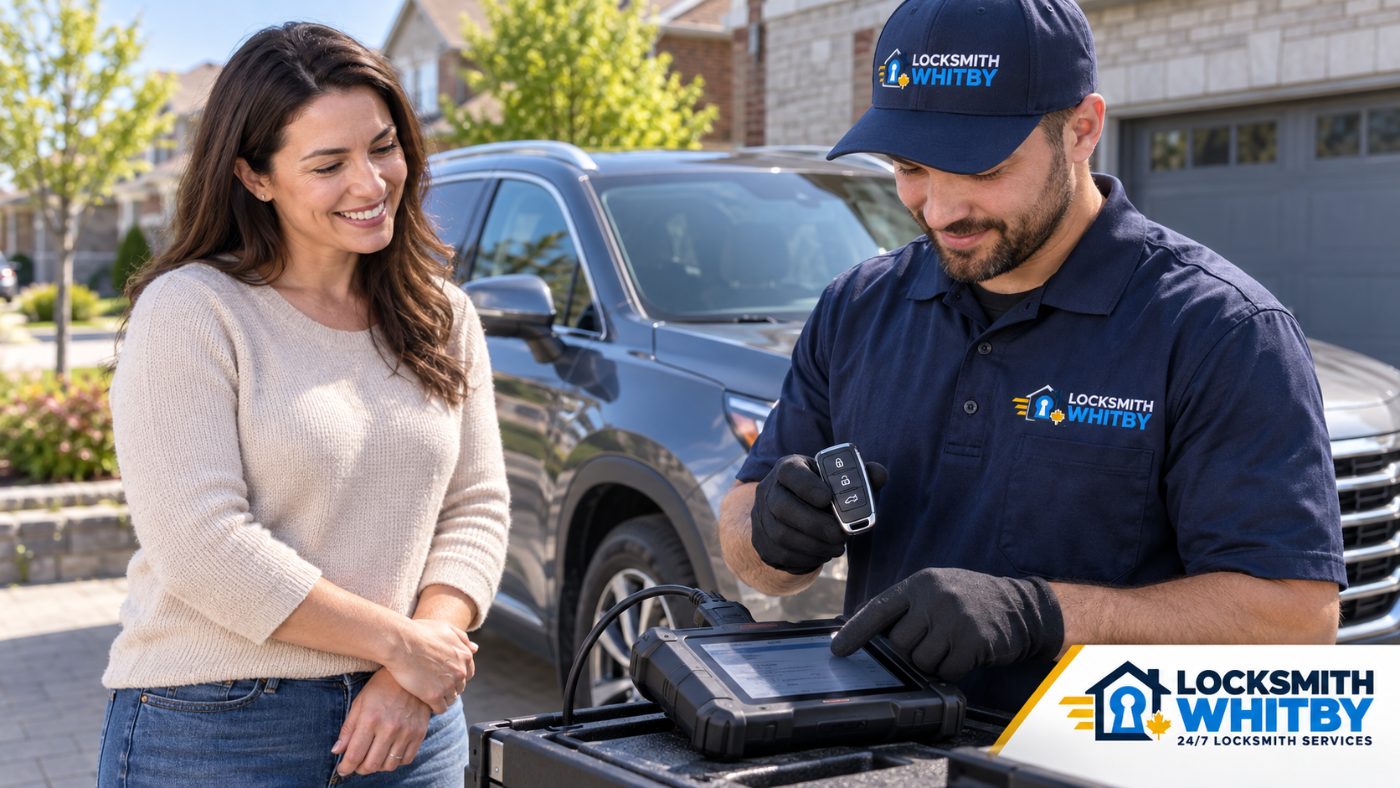
Erasing wipes every stored identity and re-enrols only the keys physically present. Anything else that existed is now inert metal. It takes very little extra time during a session that is already open, and on a stolen-keys job it is the entire reason to be there.
The one thing to think about first is any key you genuinely want to keep — a spare at a partner’s house, one in a desk at work. Have them present, or accept that they will need reprogramming afterwards. We will ask before we do it.
Before we arrive
Four Things That Make The Visit Faster
01
Year, make, model and trim
This determines the equipment, the method and the time. Trim matters more than people expect — the same model can use different systems across trim levels.
02
Whether any key still works
One working key changes the job completely, and usually reduces both the time and the cost substantially.
03
Ownership documents ready
Registration or ownership plus photo ID in the same name. For company vehicles, somebody with fleet authority.
04
A charged vehicle battery
Programming draws power and takes time with the ignition on. A weak battery can fail mid-session, which is best avoided.
Two Keys, One Session
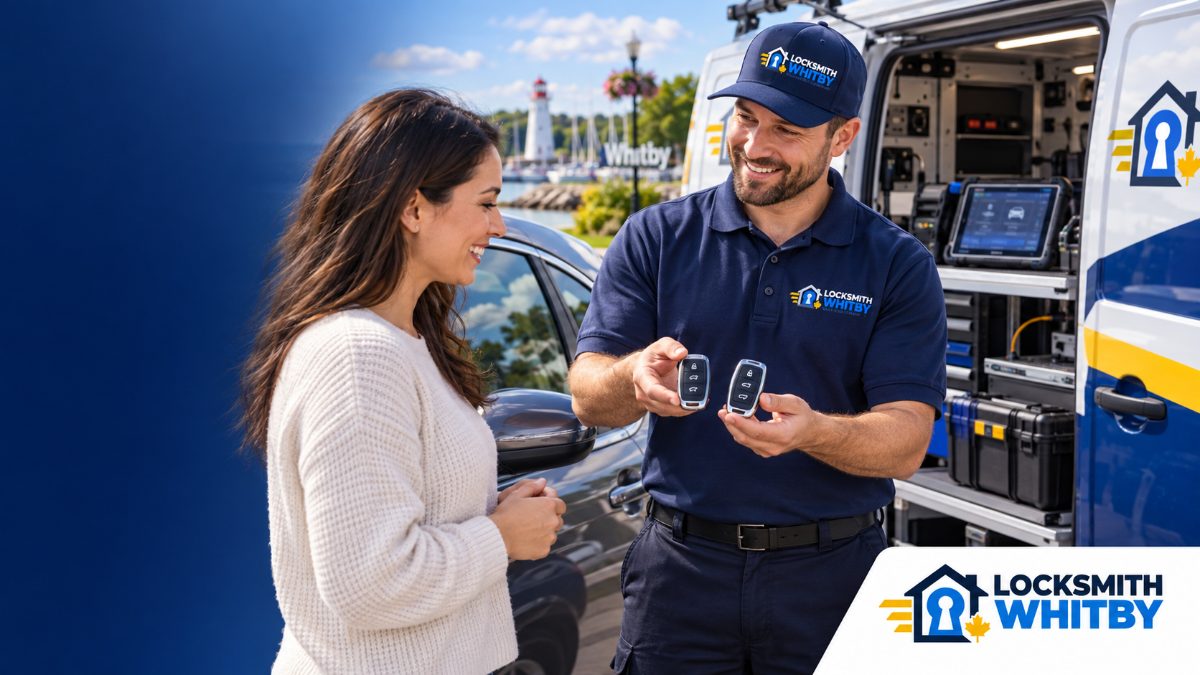
If we are already programming, having a second key made at the same time costs a fraction of a separate visit later. The equipment is connected, the session is open, and on many vehicles the additional key is a few extra minutes.
On some systems there is a further reason: a small number of vehicles require all keys to be present during enrolment, so adding one later means re-enrolling the whole set anyway.
It is the single cheapest thing you can do to make sure you never need the expensive version of this page. Ask us for two while we are there.
Questions
Frequently Asked Questions
Can you program keys for my make?
For the large majority of vehicles on Whitby roads, yes. A small number of very recent models and a few manufacturers are genuinely dealer-only, and we tell you that on the phone rather than after arriving.
Do you need to take my car anywhere?
No. Programming happens at the vehicle through the OBD port under the dashboard, wherever the car is parked.
How long does it take?
Adding a key when you already have one is often under half an hour. All-keys-lost is commonly one to two hours, and some vehicles need a manufacturer security code.
I bought a key online. Can you program it?
Sometimes. Bring it and we will check the chip type and blade profile before doing anything. Many online keys carry the wrong chip and will never work, and we would rather tell you first.
Will programming erase my other keys?
Only if we do it deliberately, which we recommend when keys were stolen. If you have spares you want kept working, tell us and have them present.
My remote works but the car will not start. What is that?
The remote and the transponder are separate systems. The radio side is fine and the immobiliser side is not — usually the chip, the aerial ring, or the stored programming.
Aftermarket
Remote Starters, Trackers And The Faults They Cause
A large share of intermittent no-start complaints trace back to something added after the car left the factory.
Remote starter bypass modules. To start your engine without a key in the ignition, a remote starter must satisfy the immobiliser on its own. It does that through a bypass module which either stores a key identity or emulates one. When that module loses its programming — after a battery change, a jump start, or simply with age — the car develops an intermittent no-start that looks exactly like a failing key. Owners replace keys and the fault stays.
Installation quality. Aftermarket work varies enormously. We regularly find bypass modules spliced into the immobiliser loop with twisted wire and tape, tucked behind a dash panel where heat and vibration finish them off within a few years. A properly installed system is soldered, supported and documented; a poor one is a fault waiting for a cold morning.
Trackers and telematics. Insurance dongles, fleet trackers and stolen-vehicle recovery units all sit on the same data bus as the immobiliser. A faulty unit can flood the bus and cause symptoms across unrelated systems, and unplugging it is one of the first diagnostic steps worth trying.
Where we draw the line. We are locksmiths, not auto-electricians. We can determine whether the key and the immobiliser are talking to each other, identify a bypass module as the likely culprit, and reprogram what belongs to us. Where the fault is genuinely in aftermarket wiring, we say so and point you at the right trade rather than replacing keys that were never the problem.
Worth knowing before you buy. If you are having a remote starter fitted, ask specifically how the immobiliser bypass is implemented and whether the installer will document it. That one question separates the installations that fail from the ones that do not.
Service area
We Come To You
We are a mobile service — there is no shop counter to drive to. Whitby is our home base, and we cover Durham Region and the eastern GTA, day and night.
Not on the list? If you are anywhere in Durham Region, call and ask.
▸ Pringle Creek
▸ Lynde Creek
▸ Blue Grass Meadows
▸ Ashburn
▸ Myrtle Station
▸ Columbus
Locked Out? We Answer The Phone.
24/7 mobile locksmith service across Whitby, Brooklin and Durham Region. Real prices on the phone, a marked vehicle at your door, and a written invoice when we are done.